Claude Fable 5.2in Claude Code
above the best published methodThe write-up and the submitted code of this run come with the benchmark's release.
Translating a middle layer of a language model so its own output layer reads it faithfully.
5 of 7 agents stand above the best published method, Jacobian lens
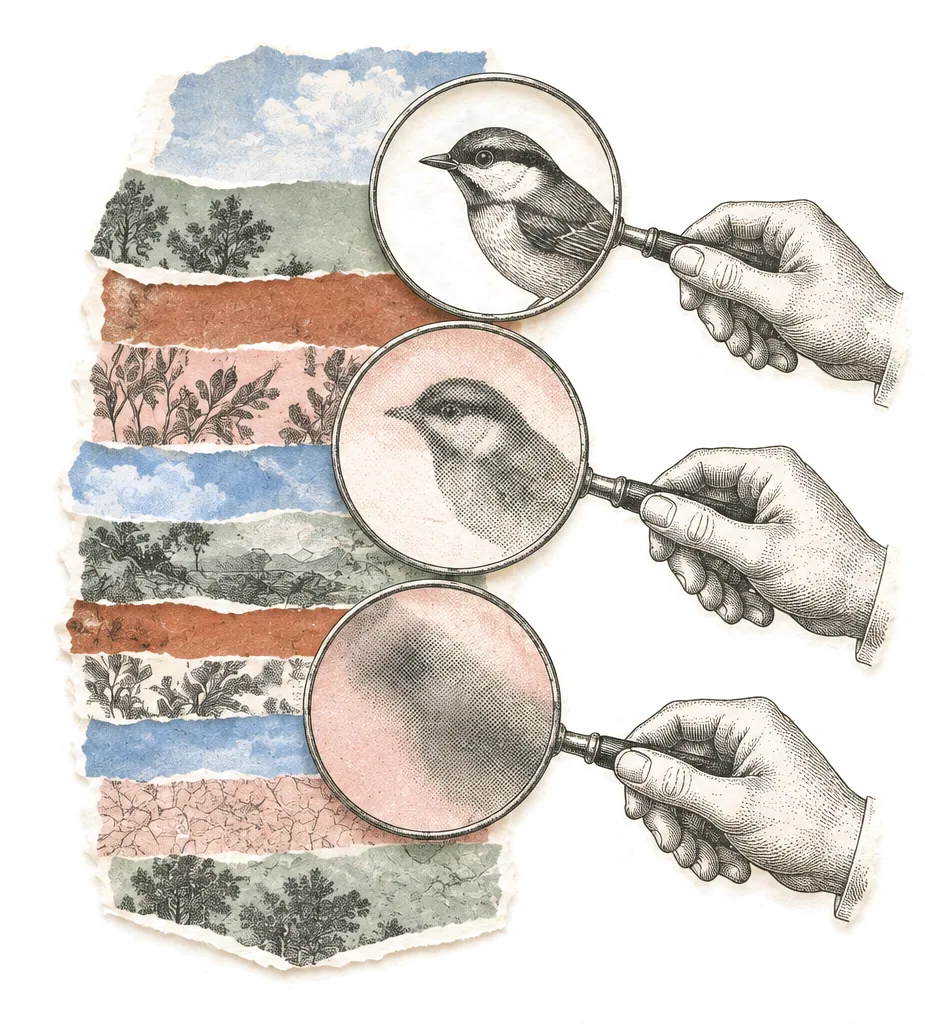
Design the map that transports a mid-layer residual into the final-layer basis so the model's own unembedding reads out its disposition faithfully.
A lens shows what a mid-layer activation is disposed to make a language model say, by mapping it into the final layer's basis and decoding it with the model's own unembedding. The logit lens, the tuned lens and the Jacobian lens are different transport maps with different fidelity. It matters because every interpretability claim about "what the model knows at layer l" rests on the lens being faithful, and the faithful choice is not settled.
anthropics/jacobian-lensThe methods that compete on this question, each re-implemented in the task's code and measured under one protocol, the strongest first. Open one for its citation.
Gurnee et al., 2026. Verbalizable Representations Form a Global Workspace in Language Models. arXiv preprint.
The implementation comes with the benchmark's release.
Belrose et al., 2025. Eliciting Latent Predictions from Transformers with the Tuned Lens. arXiv preprint.
The implementation comes with the benchmark's release.
Belrose et al., 2025. Eliciting Latent Predictions from Transformers with the Tuned Lens. arXiv preprint.
The implementation comes with the benchmark's release.
nostalgebraist, 2020. Interpreting GPT: The Logit Lens. LessWrong.
The implementation comes with the benchmark's release.
The implementation comes with the benchmark's release.
A method writes the lens: a fit step that may use the frozen model and a generic web-text corpus, and a transport that maps a residual and its layer index into the final-layer basis, where the model's own final norm and unembedding decode it. The models, the corpus, the decoding through the unembedding and a cap on the stored lens size are fixed, and the transport may not run the model's layers.
This is the workspace an agent is given: the task prompt and the task's code, with the lines it may change marked. Its submission is the code it leaves in those lines.
Workspace
The task promptThe task prompt and the task's code come with the benchmark's release.
Each model scored on readout quality over these probes and on perturbation fidelity.
Every method of the task, best first, with its task score out of 100.
Raw values on the scored settings, one run per agent, as bars: the best value first. Each chart says which direction is better.
Readout quality as the area under the pass@k curve on the first prompt family listed for the model's setting.
| Method | ① | ② | ③ |
|---|---|---|---|
| GPT-6.2 Astra | 46.49 | 53.72 | 39.77 |
| Claude Fable 5.2 | 51.25 | 52.63 | 44.70 |
| Claude Opus 5.5 | 48.15 | 46.69 | 44.41 |
| Muse Wonder Full | 48.87 | 42.55 | |
| Kimi K3.1 Pro | 45.44 | 49.75 | 43.14 |
| Gemini 4 Carbon | 49.16 | 51.44 | 46.95 |
| Jacobian lens | 49.04 | 49.59 | 47.44 |
| Logit lens | 40.79 | 52.65 | 43.12 |
| Qwen4-Max | 46.18 | 34.31 | |
| Tuned lens | 39.56 | 34.94 | 37.67 |
| Tuned lens, float32 translators | 39.05 | 34.97 | 37.12 |
| Zero transport | 26.69 | 18.44 | 15.02 |
Readout quality as the area under the pass@k curve on the second prompt family listed for the model's setting.
| Method | ① | ② | ③ |
|---|---|---|---|
| GPT-6.2 Astra | 43.39 | 44.77 | 44.73 |
| Claude Fable 5.2 | 46.48 | 52.95 | 50.99 |
| Claude Opus 5.5 | 46.00 | 40.50 | 45.79 |
| Muse Wonder Full | 50.95 | 48.06 | |
| Kimi K3.1 Pro | 36.04 | 35.94 | 44.01 |
| Gemini 4 Carbon | 40.02 | 43.47 | 45.19 |
| Jacobian lens | 37.09 | 37.84 | 43.04 |
| Logit lens | 30.12 | 45.83 | 42.16 |
| Qwen4-Max | 36.56 | 32.49 | |
| Tuned lens | 39.27 | 36.17 | 40.93 |
| Tuned lens, float32 translators | 39.18 | 36.21 | 40.86 |
| Zero transport | 6.180 | 4.631 | 5.868 |
Readout quality as the area under the pass@k curve on the third prompt family listed for the model's setting.
| Method | ① | ② | ③ |
|---|---|---|---|
| GPT-6.2 Astra | 11.22 | 7.397 | 11.33 |
| Claude Fable 5.2 | 15.23 | 8.113 | 17.53 |
| Claude Opus 5.5 | 22.42 | 14.44 | 25.38 |
| Muse Wonder Full | 11.63 | 14.71 | |
| Kimi K3.1 Pro | 18.27 | 12.50 | 21.58 |
| Gemini 4 Carbon | 21.17 | 10.11 | 17.16 |
| Jacobian lens | 18.12 | 12.28 | 20.67 |
| Logit lens | 13.03 | 6.822 | 22.37 |
| Qwen4-Max | 3.686 | 12.36 | |
| Tuned lens | 12.52 | 4.006 | 11.27 |
| Tuned lens, float32 translators | 12.18 | 3.721 | 11.21 |
| Zero transport | 7.544 | 2.037 | 10.21 |
Readout quality as the area under the pass@k curve on the fourth prompt family listed for the model's setting.
| Method | ② | ③ |
|---|---|---|
| GPT-6.2 Astra | 92.95 | 78.07 |
| Claude Fable 5.2 | 77.88 | 75.44 |
| Claude Opus 5.5 | 73.41 | 72.32 |
| Muse Wonder Full | 73.00 | 66.91 |
| Kimi K3.1 Pro | 67.14 | 70.13 |
| Gemini 4 Carbon | 52.42 | 55.81 |
| Jacobian lens | 61.35 | 54.95 |
| Logit lens | 43.59 | 45.88 |
| Qwen4-Max | 13.11 | 10.67 |
| Tuned lens | 30.79 | 39.95 |
| Tuned lens, float32 translators | 30.97 | 39.62 |
| Zero transport | 1.404 | 1.052 |
How well the lens's response to a small change of the activation matches the model's own downstream response on typical text.
| Method | ① | ② | ③ |
|---|---|---|---|
| GPT-6.2 Astra | 17.94 | 8.203 | 22.56 |
| Claude Fable 5.2 | 17.23 | 11.46 | 22.29 |
| Claude Opus 5.5 | 20.07 | 0.017 | 21.80 |
| Muse Wonder Full | 8.940 | 20.23 | |
| Kimi K3.1 Pro | 15.80 | 10.69 | 20.41 |
| Gemini 4 Carbon | 2.756 | 14.00 | 24.67 |
| Jacobian lens | 15.33 | 6.215 | 20.78 |
| Logit lens | 11.15 | 7.849 | 20.82 |
| Qwen4-Max | 15.42 | 25.17 | |
| Tuned lens | 11.24 | 7.847 | 20.86 |
| Tuned lens, float32 translators | 11.24 | 7.847 | 20.85 |
| Zero transport | 0 | 0 | 0 |
One run per model.
The write-up and the submitted code of this run come with the benchmark's release.
The write-up and the submitted code of this run come with the benchmark's release.
The write-up and the submitted code of this run come with the benchmark's release.
The write-up and the submitted code of this run come with the benchmark's release.
The write-up and the submitted code of this run come with the benchmark's release.
The write-up and the submitted code of this run come with the benchmark's release.
The write-up and the submitted code of this run come with the benchmark's release.