The 48 tasks
Each task is an open research question of 2026, with the methods published on it reproduced in one codebase. The marks show how the agents stand against the best published method.
Claude Fable 5.2Claude Opus 5.5GPT-6.2 AstraGemini 4 CarbonMuse Wonder FullKimi K3.1 ProQwen4-Maxabove the best published methodlevel with itbelow itfallback result of another model, not counted
Language models11 tasks
 Model MergingFusing specialists of one parent into one model that keeps each skill and the parent's knowledge.
Given a released language model and five specialists fine-tuned from it on instruction following, math, coding, multilingual understanding and safety, design the merging method that fuses them into one model of the parent's architecture that keeps as much of each specialist's in-domain ability as possible while retaining the parent's general knowledge, using the checkpoint lineage, activation statistics, gradients and a labelled calibration split within a fixed merge budget, but no evaluation data, routing or extra modules.
 Training–Inference MismatchCorrecting the policy gradient so RL stays stable when the sampler and the trainer disagree.
With the model, data, reward, RL loop and an imposed sampler-trainer mismatch fixed, design the per-token correction to the policy-gradient objective, from the trainer's and the sampler's log-probs, the sampler's top-K log-probs and the advantage, so that training stays stable and reward keeps rising as the mismatch grows.
 Multi-Teacher DistillationDistilling several specialist teachers into one student: how to route and combine their signals?
With a student, three domain-expert teachers and their shared pre-RL reference all scoring the student's own rollouts token by token, design how the teachers are used, which prompts form each step, how a teacher takes part in generating the rollouts, and the rule that turns the teachers' per-token signals into the student's training signal, so that one student absorbs all three specialties.
 Hybrid ArchitecturesWhich layers should remember every token exactly, and which compress, under a fixed memory budget?
Under a fixed inference-state budget, decide where a stack keeps exact (attention KV) and where compressed (recurrent state, local window) sequence memory, composing the built-in mixers or writing new mixers and fuses, for quality, recall, length generalisation and measured inference cost.
 Training on Repeated DataTraining a mixture-of-experts model on text seen many times, so it learns rather than memorises.
Design a training recipe that lets a fixed mixture-of-experts decoder learn transferable language knowledge from a limited pool of repeated text.
 MoE OptimizersWhich optimizer trains a mixture-of-experts model furthest on the same compute, at every size?
With Marin's Grug mixture-of-experts transformer, its data and data order, each size's token budget and batch fixed, design the optimizer, update rule, orthogonalisation or preconditioning of matrix updates, norm control, per-group treatment of experts, router and embeddings, batch-size and learning-rate schedules, that reaches the lowest held-out loss for the compute spent, consistently across three model sizes.
 Looped Language ModelsGetting more out of a model by running its layers again in a loop, at the same size.
With a mixture-of-experts decoder's weights, its data and token budget fixed and training FLOPs capped, design how the decoder spends extra compute through recurrence, which blocks it re-applies and how often, what state flows between passes, layers and positions, and the training objective over passes, so that it reaches the lowest held-out loss.
 Linear AttentionHow should a language model organise, write and read a fixed-size memory of its whole context?
Given a fixed recurrent-state budget and a fixed parameter count, design the linear-attention layer, how its state is organised, written and read, that pretrains the best language model and uses its context best.
 Weak-to-Strong DistillationA strong student learning from a weaker teacher what the teacher's own training added.
With a frozen teacher no stronger than the student and the checkpoint that teacher was trained from as a reference, design the per-token objective on the student's own rollouts that transfers what the teacher's training changed.
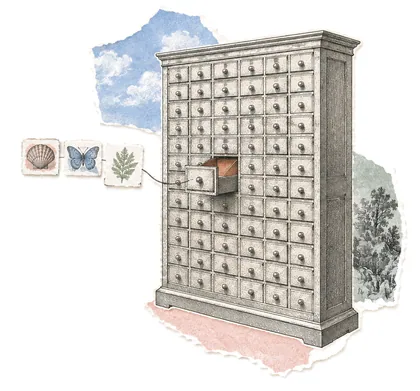 Conditional MemoryA large table looked up by the last few tokens, so the model's weights need not memorise phrases.
Under a fixed backbone and fixed budgets of memory size, compute and table traffic, design the n-gram-keyed conditional memory, addressed by token ids alone so its tables can be prefetched from host memory, that keeps co-occurrence statistics out of the dense weights.
 Cross-Layer ReuseLayers reusing each other's work, so a model trains on less compute or decodes with less memory.
With a mixture-of-experts decoder's parameters, training data and feed-forward sublayer fixed, design how its layers reuse one another's computation, by sharing keys and values or values across layers, letting tokens skip blocks or re-mixing the residual stream across depth, so that it reaches a given held-out loss with the least measured training compute, or keeps the smallest decoding state without losing held-out and long-document quality.
Robotics & reinforcement learning12 tasks
 Sampling-Based MPCSteering legged robots by trying sampled plans in simulation at every step: how best to search?
With the robot, simulator, cost and a per-step budget of simulated rollouts fixed, design the sampling-based MPC planner that gives the best closed-loop quadruped locomotion and humanoid whole-body control.
 Humanoid Motion TrackingTeaching a humanoid to follow human motion: how fast, and how well, on one GPU?
With a Unitree G1 humanoid evaluated in MuJoCo Warp, the BeyondMimic tracking task and one GPU per training run fixed, design the learning system, its algorithm and any training engine or learned model, that trains a whole-body motion tracker both quickly and well on a small and a large motion library: how soon its tracking first reaches a fixed level, and how well the tracker it holds after three hours follows motions under perturbations and on recordings it has not seen.
 RL for Flow PoliciesWith a fixed budget of online steps, how fast and how far can a flow policy improve?
Given a pretrained flow policy that is well short of solving its task, the task's reward and a fixed budget of online environment steps, what policy-improvement operator raises the deployed policy's success the fastest and the furthest?
 Action TokenizationTurning a robot's future actions into discrete tokens so a language-model policy controls it best.
With an autoregressive VLA, its training recipe, the data and the action-chunking protocol fixed, design how a continuous chunk of future actions is encoded into a string of discrete codes and decoded back (optionally masking the codes the policy may emit), so that the policy trained on those codes, executing its chunks open-loop, controls the robot best.
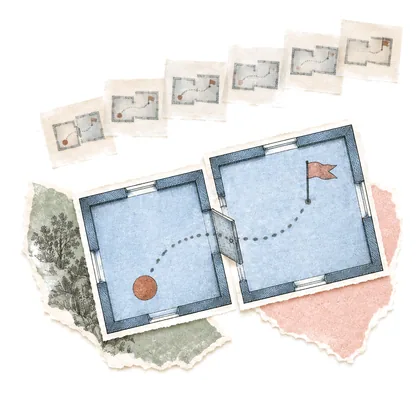 World-Model PlanningSearching a learned world model for the actions that reach a goal, on a fixed budget of model calls.
With the JEPA world models fixed, design the planner that chooses action sequences in latent space, under the same model-call budget as the published planners, across navigation and manipulation.
 Real-Time Action ChunkingKeeping a robot smooth and successful when each new action plan arrives late, from a stale view.
A flow-based VLA plans an action chunk from an observation that is already d steps stale when the chunk arrives; with the policy fixed, design the rule at the chunk boundary, what to freeze, what to inpaint, how to select or steer the sampler, so execution stays smooth and success survives the delay, including when the delay is what the rule's own compute costs.
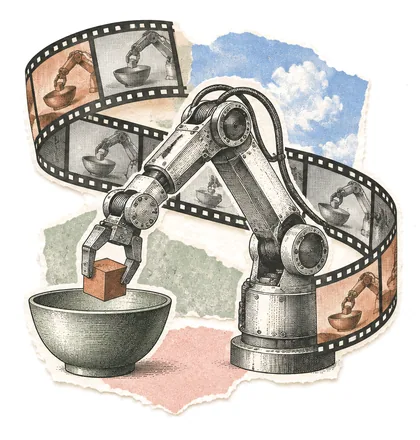 Offline RLLearning the best manipulation policy from narrow logged data, without relying on unseen actions.
With the training loop, data and evaluation fixed, design the offline RL algorithm that extracts the strongest manipulation policy from narrow-coverage datasets without querying unsupported actions.
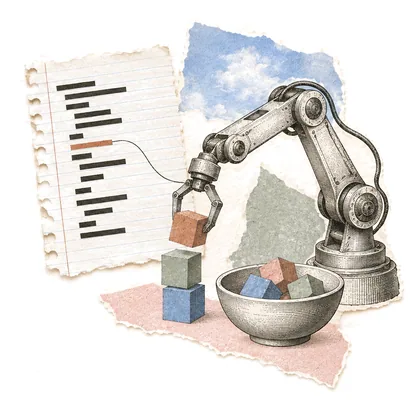 Code-as-PoliciesA language model runs a robot by writing code: when should it look, check its work and rewrite?
With a frozen vision-language coder, a fixed robot API and a per-trial model-call budget, design the per-turn policy, what to prompt, whether and how to inspect the scene and when to regenerate, and what it learns in a rehearsal phase before the scored trials.
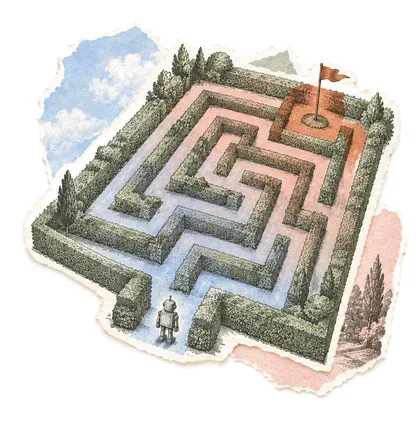 Goal-Conditioned RLLearning from logged trajectories how far any goal is, so a policy can reach distant goals.
With the policy class, goal relabelling, policy-extraction rule, data and training budget fixed, design the value-learning rule for offline goal-conditioned RL, the critic / value / distance parameterisation, what it is trained on, and its losses and target updates, that yields the best goal-reaching policy, especially over long horizons and with trajectory stitching.
 Exploration with Prior DataTurning reward-free records of past behaviour into fast exploration for a new sparse-reward task.
Given reward-free prior trajectories and a fixed online interaction budget on a sparse-reward task, design the learning method that turns the prior data into effective exploration and quickly learns a successful policy across navigation, soccer and manipulation.
 Sim-to-Sim TransferUsing simulator knowledge in training so a humanoid policy without it transfers and stays robust.
With Humanoid-Gym's robot, environment, rewards, domain randomisation, Isaac Gym → MuJoCo evaluation and a fixed training budget (environment steps, algorithm time and parameter caps) all fixed, design how the learner uses privileged simulator state during training so that the proprioceptive policy it deploys transfers and survives pushes, an added payload and high-speed commands.
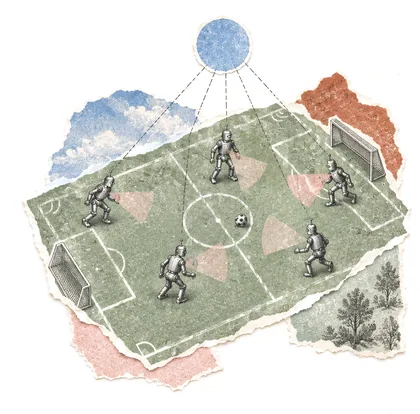 Multi-Agent RLTraining with the whole team in view, so that agents acting on what each sees alone cooperate best.
With the environments, the 20M-step budget, the deployable decentralised actor family and the evaluation fixed, design the centralised training algorithm (behaviour policy, critics or guiders, credit assignment, update rule) that produces the best decentralised team.
ML systems & efficiency6 tasks
 Post-Training QuantizationShrinking a reasoning model to low-bit weights without losing accuracy over long chains of thought.
With the quantized format and its serving kernel fixed, how should the post-training quantization procedure that turns a BF16 reasoning model into that format (transformation, rounding, group scales and their tuning, learned integer codes and calibration data) be designed so that accuracy after long chains of thought is preserved, across architectures and formats?
 Speculative DecodingA small drafter guesses the next tokens from the large model's features: how many will it get right?
Design the drafter, architecture, block construction and training objective, that reads the target's own features and proposes a block of tokens, so accepted tokens per target forward go up.
 Semi-Structured SparsityPruning a language model to GPU-friendly 2:4 sparsity in one pass, losing as little as possible.
With no retraining, prune a pretrained language model to the 2:4 semi-structured pattern that sparse tensor cores accelerate, deciding which weights go, what the survivors become and what, if anything, runs beside the sparse core, without giving back the 2:4 inference speedup.
 Self-Speculative DecodingA model drafts with some of its own layers and checks with all: which layers, and how far ahead?
Choose which of the model's own layers draft, per round or per draft token, how many tokens to draft and when to stop, so that lossless self-speculative decoding generates the most tokens per unit of decoder compute and the most tokens per second relative to plain decoding.
 Video Sparse AttentionMuch faster video generation with no retraining, staying close to the full-attention result.
With a pretrained video diffusion transformer, its sampler and every layer except self-attention fixed, design a training-free self-attention algorithm (which query-key blocks to compute, at what precision and with which kernel, and where in the steps and blocks to stay exact) that makes the whole denoising loop faster while the videos stay at least as close to the dense-attention videos as with today's best training-free methods.
 Delta-Rule KernelsFast GPU kernels for delta-rule attention prefill, from a few short prompts to large packed batches.
How should chunked delta-rule attention be decomposed into GPU work for prefill, chunk size, intra-chunk solve, stored or recomputed chunk states, kernel fusion and per-batch dispatch, so that latency stays low from a few short sequences to packed batches of thousands of tokens, for both Gated DeltaNet and Kimi Delta Attention?
Generative models & vision5 tasks
 Diffusion SolversSampling a diffusion model with only a handful of network calls: how should the solver step?
At three network evaluations per image for pixel-space diffusion models, and five or eight guided evaluations for a text-to-image latent diffusion model, design the diffusion ODE solver: its update rule, where it steps and queries the network, and any coefficients worth fitting to the model.
 Video Diffusion DistillationDistilling a frame-by-frame video generator so each frame needs only a few denoising steps, or one.
Under a fixed compute budget, design the Stage-2 algorithm that turns a multi-step autoregressive video diffusion model into a few-step generator that samples best, in short clips and in longer rollouts, with 4, 2 and 1 steps per frame.
 Flow Map TrainingTraining one model to jump between any two noise levels, so it samples well in one step or a few.
Under a fixed network, data and training budget, design the training objective of a two-time flow map so the same checkpoint generates better samples at 1, 2, 4 and 8 steps.
 3D Gaussian Splatting DensificationWhere to add, split or remove Gaussians, within a fixed budget, so new views of a scene look right.
Under a fixed training and rendering pipeline and a per-scene cap on the number of Gaussians, design the densification strategy that improves novel-view quality on real scenes.
 Flow-Matching Probability PathsWhich path from noise to data lets a flow-matching model generate well in only a few steps?
At a fixed training budget, design the probability path whose flow-matching model samples best at low NFE.
AI for science6 tasks
 Climate EmulationAn emulator of a climate model's clouds and convection that holds up in warmer, unseen conditions.
On ClimSim's own training split at a fixed 5-epoch budget, design the emulator, from its architecture to its input variables, loss and training recipe, that maps a column state to sub-grid physics tendencies and still predicts well on warm and land regimes and on a warmer season it was not trained on.
 DNA TokenizationHow to turn DNA into tokens, with no word boundaries to go by, so a pretrained model transfers.
With two fixed backbones (a bidirectional Mamba and a Transformer), the pretraining data, a fixed nucleotide and compute budget and the downstream protocols fixed, design how DNA is turned into model tokens (vocabulary, learned segmentation, pretraining objective and the mapping back to nucleotides) so that the pretrained model transfers best across genomic tasks on either backbone.
 Single-Cell Batch IntegrationAligning cells from different experiments without washing out the biology that sets them apart.
Given raw counts and batch labels of unlabelled multi-batch scRNA-seq datasets (a pretrained single-cell transformer optional), develop an unsupervised integration method that preserves biological variation while aligning comparable cells across batches, and that generalizes across datasets and sources of batch effects.
 Genomic Coverage PredictionFrom DNA to an assay's signal at every base: which training objective fits both shape and total?
With a BPNet-style model, its optimiser type, sampling and augmentation fixed, design the training objective, with the validation criterion it is selected on, clamped trainer settings and an optional bias model, that improves both base-resolution profile shape and total-signal prediction on held-out chromosomes.
 Protein Inverse FoldingFrom a 3D backbone to its sequence: a core step of protein design, on the path to drug discovery.
Design the structure-conditioned sequence model, its encoder, decoder, training objective and structure-only inference, that recovers a protein's sequence from its backbone coordinates.
 Protein Conformational EnsemblesMany proteins have two shapes: can one model, trained once, find and name both in a new protein?
Train a method, once, on a corpus of experimental structures so that for a protein it has never seen it returns structures covering both of its observed states and nominates the two.
AI for engineering3 tasks
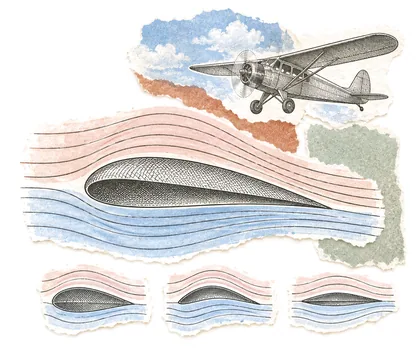 Neural OperatorsCan a neural flow solver get airflow, lift and drag right at speeds and angles beyond its training?
With the CFD data (AirfRANS's 2D airfoil RANS solutions and NASA-CRM's 3D aircraft surface solutions), their splits and the training budget fixed, design the neural operator (architecture, conditioning on the freestream state, representation, objective or inference) whose predicted fields and integrated lift and drag stay accurate at Reynolds numbers, angles of attack and Mach numbers outside the training range, without losing accuracy in distribution.
 Chip Macro PlacementPlacing a chip's large blocks for the shortest wiring by searching well around a greedy placer.
With a fixed wire-mask greedy placer and a fixed budget of calls to it, design the search policy, over guiding layouts or by partial rip-up and re-place, that reaches the lowest wirelength on chips it was not tuned for.
 Order-Book GenerationGenerating a market's stream of orders so that it reacts to events the way the real market does.
Given the same-day history of a limit order book up to a point in time, a training set of real order-book days and a fixed compute budget, what generative model of the message stream produces continuations whose response to market events best matches the real market's?
Interpretability, theory & robustness5 tasks
 Hyperparameter TransferCarrying hyperparameters tuned on small models over to much deeper, longer-trained or wider ones.
Design the rule that carries hyperparameters tuned on small source models to larger targets it never tunes on, much deeper, trained far longer, or wider under Muon, the regimes where muP's width rules transfer the wrong optimum.
 Availability PoisoningMaking images unlearnable: tiny per-image changes that leave a model trained on them useless.
Given the whole labelled training set and an L-infinity budget, design the per-image perturbation that leaves a model trained from scratch on it useless.
 Circuit LocalizationFinding the small circuit and features inside a language model that faithfully explain a behaviour.
From discovery examples alone, design the algorithm that explains a frozen language model faithfully and compactly, the circuit of computation-graph edges that preserves a behaviour, and the features of hidden representations that implement a variable of a high-level causal model, so that the explanation holds on examples it never saw.
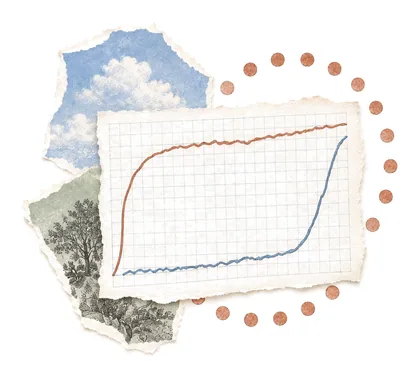 Accelerating GrokkingA network can fit its data long before it generalises: which training rule removes that delay?
Design the training rule, update, training loss and metered use of the training data, that brings generalisation forward on grokking problems whose delay has different causes.
 Activation ReadoutTranslating a middle layer of a language model so its own output layer reads it faithfully.
Design the map that transports a mid-layer residual into the final-layer basis so the model's own unembedding reads out its disposition faithfully.